Vaibhav Attre.boot

retro-futurist workstation init

[ 0.000] POST: workstation bus scan complete
[ 0.013] memctl: 64 GiB addressable, ECC nominal
[ 0.029] sched: run queue initialized
[ 0.041] fs: mounting /home/vaibhav
[ 0.068] net: link up on loopback and uplink0
[ 0.091] ui: terminal compositor ready
[ 0.112] session: entering interactive workspace
Loading command bus, filesystem tree, and process monitor.
Vaibhav Attre.ws
/projects/sentinelq
shell bus
vaibhav@ws:/projects/sentinelq$ session
interactive workstation online
type `help` or press `/` to focus the shell
tab completes top match
/projects/sentinelq

SentinelQ

Hybrid edge-cloud surveillance system with multi-camera ingestion, adaptive local vs cloud inference, operator-facing web tooling, and LLM-assisted threat summaries.
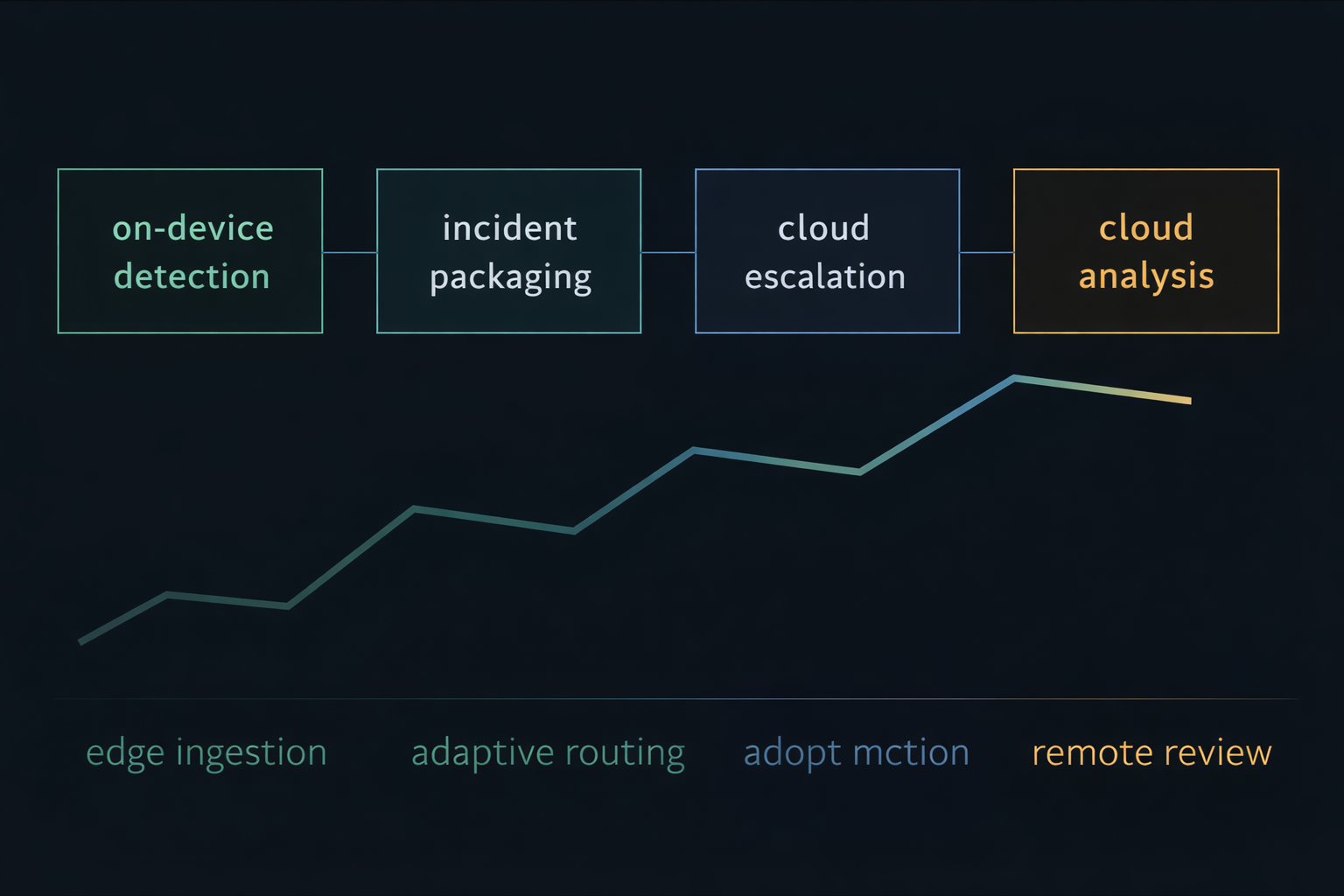
SentinelQ edge-cloud surveillance pipeline
ml systems

SentinelQ

SentinelQ is a hybrid edge-cloud home surveillance platform built at IrvineHacks on Qualcomm Arduino UNO Q hardware. The system ingests multiple live camera streams, performs on-device detection and incident handling, and selectively routes more complex cases to the cloud for deeper analysis. Beyond the core inference path, the project includes a full-stack product surface with a Next.js frontend, FastAPI backend, PostgreSQL via Supabase, an on-device HTTP debug endpoint for live feed and runtime metrics, and an LLM-powered control assistant for text-command threat summaries. The overall design emphasizes practical deployment constraints such as bandwidth, latency, connectivity, and debuggability rather than assuming unlimited cloud access.

date: March 2026status: active
overview

Conventional surveillance systems often force an all-local or all-cloud tradeoff. SentinelQ explores a more practical middle ground: responsive on-device handling for speed and bandwidth efficiency, paired with selective cloud escalation for higher-quality analysis and a usable end-to-end operator experience.
implementation
Built an edge pipeline that ingests multiple camera streams, performs event detection, maintains rolling context around incidents, and materializes finalized outputs as structured video-plus-metadata artifacts.
Implemented adaptive local-versus-cloud routing so the system can preserve responsiveness on-device while still escalating complex or lower-confidence cases for deeper remote analysis.
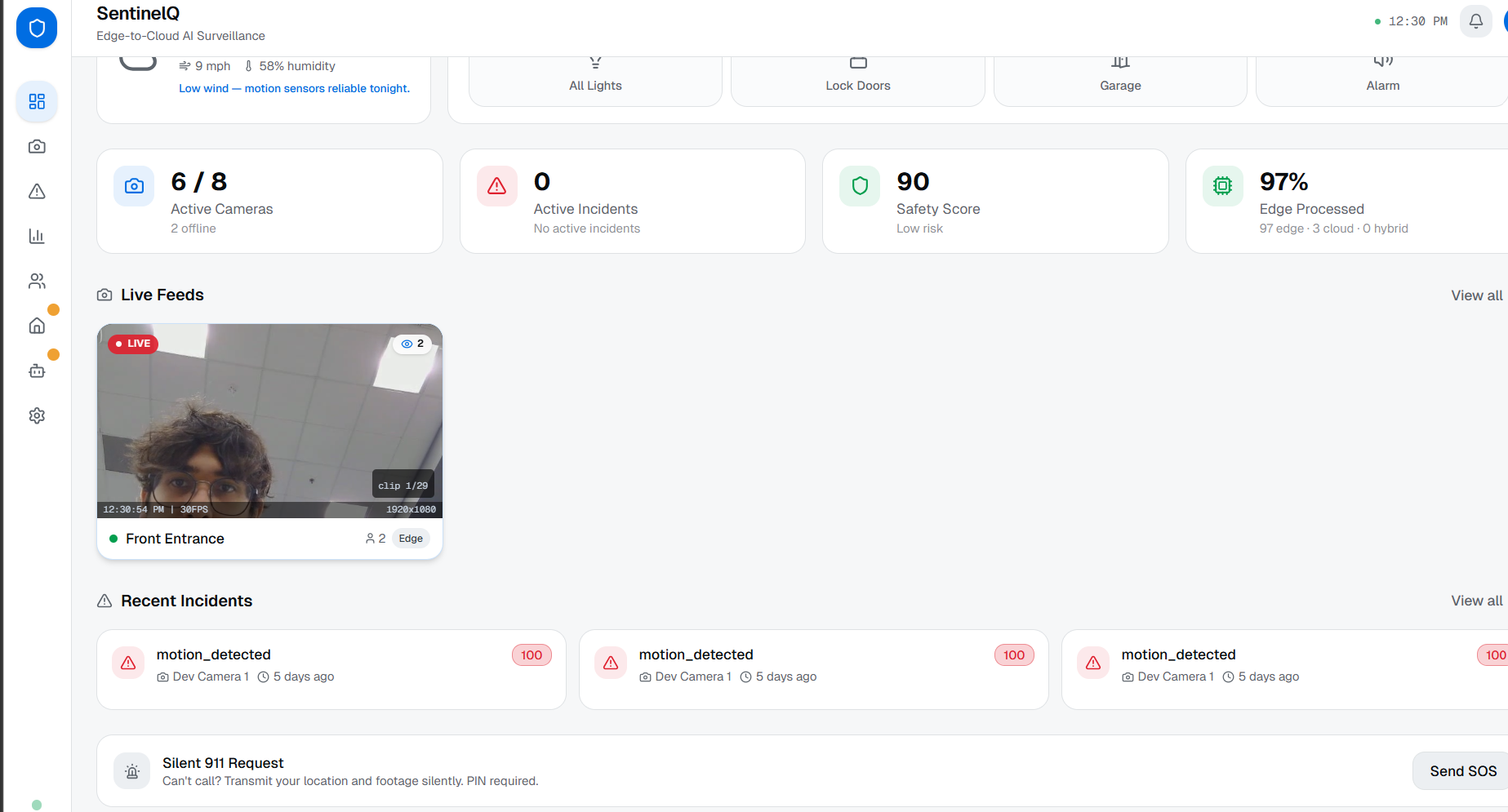
Developed the product surface as a full-stack application using Next.js for the frontend, FastAPI for backend services, and PostgreSQL via Supabase for persistence and incident tracking.
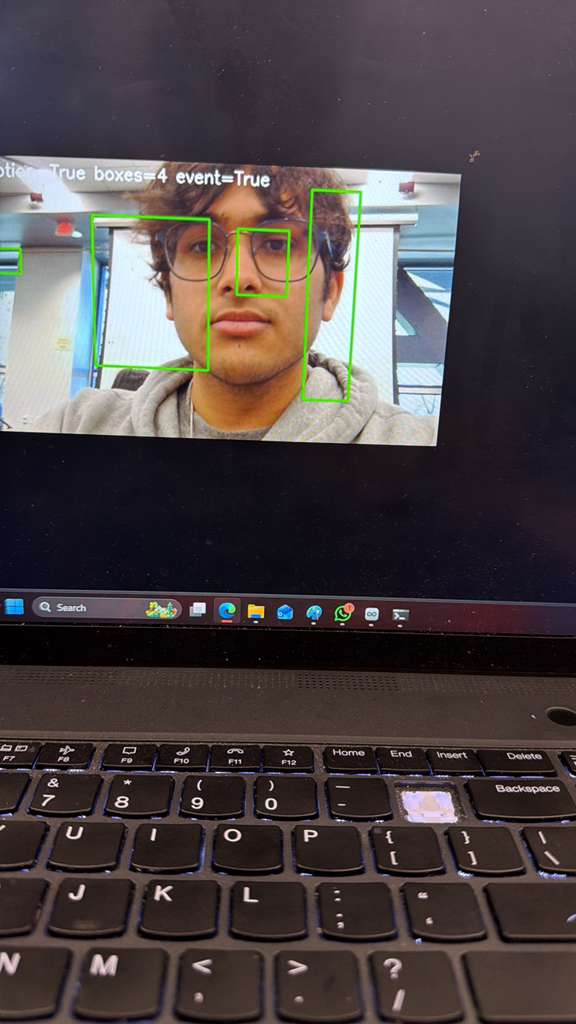
Exposed an on-device HTTP debug interface with live feed and metrics, enabling direct inspection of runtime behavior when standard board tooling was limiting development velocity.
Integrated an LLM-powered control assistant that produces text-command threat summaries and improves the operator workflow around reviewing incidents and system outputs.
challenges
Balancing latency, bandwidth, connectivity, image quality, and detection quality required explicit routing policy rather than a single fixed inference path.
Handling multiple simultaneous camera streams on constrained hardware pushed the design toward lightweight local processing and careful incident packaging.
The project needed to remain observable across both device-side execution and backend services, which made debugging and system introspection a core part of the implementation.
Tooling limitations on the hardware platform required building alternative development and debugging workflows directly into the system.
outcomes
Delivered a working end-to-end edge-cloud ML system rather than an isolated embedded model demo.
Demonstrated strong overlap between embedded systems, ML inference, backend architecture, and operator-facing product development.
Created a foundation that can be extended with richer escalation policies, stronger local models, better cloud analytics, and a more polished production dashboard.
architecture notes
The edge layer continuously ingests multiple live camera feeds, performs lightweight local processing, and packages incidents with associated metadata for downstream handling.
The inference path is adaptive: the system can respond locally under edge constraints or escalate to cloud analysis when connectivity, confidence, image quality, or latency policy makes deeper processing worthwhile.
The product includes both embedded observability and a web-facing control surface, connecting device-side capture and filtering to backend persistence, operator review, and language-based summaries.
stack
PythonC++Next.jsFastAPIPostgreSQLSupabaseOpenCVFFmpegLLM APIsYOLOBranchy ResNets
highlights
Built a low-cost surveillance platform on Qualcomm Arduino UNO Q handling 4+ simultaneous camera streams.
Designed adaptive inference logic that keeps fast paths local and routes harder cases to the cloud for deeper analysis.
Shipped a full-stack system with a Next.js frontend, FastAPI backend, PostgreSQL via Supabase, and an LLM assistant for text-command threat summaries.
Added an on-device HTTP debug endpoint exposing live feed and metrics to support SSH-first development and real-time observability.
metrics
camera streams
4+
local accuracy
84%
cloud accuracy
90%
media
SentinelQ Camera Functionality
A live camera feed with on-device bounding boxes, incident packaging, and debug metrics exposed via an HTTP endpoint for real-time observability.
Website dashboard view
The SentinelQ web dashboard surfaces incident summaries, video playback, and system status, while the LLM assistant provides text-command interaction for reviewing threats and system behavior.